Why Endurance Races Divide the Distance into Stints
Why endurance races use driving stints: see how driver changes, fuel, tires, and traffic turn a long event into a shared rhythm of manageable decisions.
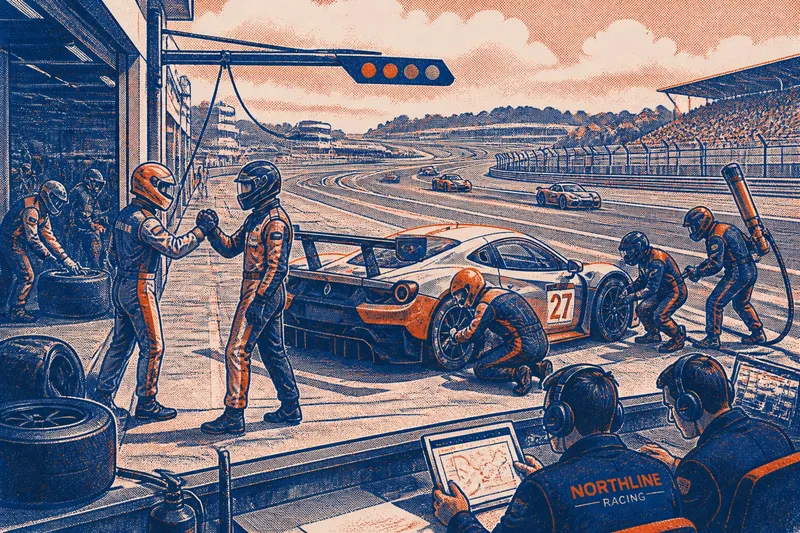
The driver’s gloves are still warm when the crew member signals that the next stint is ready. In an endurance race, that handoff is more than a driver change: it is one of the recurring boundaries that gives the long event its shape. Stints divide the distance into periods a team can plan, drive, and reassess without pretending the whole race will unfold exactly as expected.
That is why endurance races divide the distance into stints. The format connects driving time to practical limits—fuel, tires, driver availability, and the rules—while giving the team a rhythm that a short sprint does not need. The invented situation below follows one crew through a race and shows how those limits influence decisions from one stint to the next.
What does a stint organize?
A stint is a continuous period of driving by one driver, usually ending when the car enters the pits for service or a driver change. It is not necessarily a fixed distance. Its length can depend on how the event regulates fueling and driver time, the car’s fuel use, tire condition, traffic, and what the team is trying to accomplish.
Think of a stint like a chapter in a long book: it has a beginning and an end, but its value comes from what it sets up next. A driver may start with a clear task, such as keeping the car in clean air, managing tires, or maintaining a steady pace. The crew then uses the information collected during that period to prepare the following one.
That boundary also makes a complicated race easier to communicate. Instead of asking a driver to manage the entire event in the abstract, a team can discuss the current stint’s priorities, the expected pit window, and what conditions would change the plan. The race remains continuous; the working plan becomes easier to handle.
How does an invented crew shape its first stint?
Imagine a fictional GT team called Northline entering a long circuit race with two drivers, Mira and Owen. The organizers’ rules allow each driver to spend only a set amount of time behind the wheel, and the team’s car uses fuel at a pace that makes repeated pit stops necessary. Northline begins with Mira in the car and a plan to reassess at the first stop, rather than treating its opening schedule as unchangeable.
Mira’s first stint is about settling into the traffic and keeping the car predictable. She avoids forcing a pass when another car is defending, reports a vibration that appears on corner exit, and tells the crew how the tires feel as the stint develops. Those observations give the engineers something more useful than a bare lap time: they can consider whether the sensation is tied to traffic, tire behavior, or a developing issue.
As the planned stop approaches, a slower group of cars changes the conditions. The crew could bring Mira in at the first available opportunity or leave her out briefly if the situation remains manageable. In this invented case, they choose to wait for a clearer opening, while asking her to preserve the tires and avoid unnecessary risk. The decision is not a universal rule; it follows from their priorities and the information they have at that moment.
What changes at the pit stop?
When Northline calls Mira in, the stop creates a chance to address several needs together. The crew can refuel if permitted and required, change tires if the plan calls for it, inspect the car, and put Owen behind the wheel. Which tasks can happen, and in what order, depends on the event’s rules and the team’s procedures.
The driver handoff transfers more than the seat. Mira reports the vibration, describes where it appears, and explains how the car behaved in traffic. Owen receives a concise account of the conditions and his initial priorities. A useful handoff is specific enough to guide the next stint, but it does not turn a driver’s impression into a diagnosis.
Rules and instructions matter here: teams need to follow the event regulations and the car maker’s guidance for relevant equipment and service. For a viewer, the pit stop is a visible marker between stints, but its deeper purpose is coordination. Fuel, tires, checks, and driver time all meet in one brief operational window.
How can the next stint revise the plan?
Owen leaves the pits with a different task from Mira’s. The vibration has not been confirmed as a serious fault, but the crew wants him to report whether it continues. He is also asked to keep the car settled while the team compares his feedback with Mira’s and watches for changes in handling.
During his stint, the vibration fades, but traffic becomes harder to read. Northline learns that the car feels more stable than the first report suggested, yet the crowded section still makes aggressive passing a poor use of the team’s attention. The crew can now adjust its expectations for the next stop: it has new information about the car and a clearer sense of the traffic pattern.
This is the practical reason stints create a rhythm rather than a rigid timetable. Each period gives the team a chance to set priorities, observe what happens, and update the next assignment. The plan is more like a paper schedule that can be amended than a script everyone must follow regardless of conditions.
What do viewers often ask about endurance stints?
How long is a racing stint?
There is no single standard length. A stint may be shaped by fuel capacity, tire use, driver-time rules, the race format, and the team’s strategy, so the same event can produce different schedules as conditions change.
Does every pit stop end a stint?
For the driver currently on track, a pit stop usually marks the end of that driving period. But a stop does not always include a driver change; the same driver may return to the track if the rules and team plan allow it.
Why not keep one driver in the car for the whole race?
Long events must account for driver limits, fatigue, and the demands of sustained concentration, as well as the car’s need for service. Teams share the driving so the event can be managed across the crew rather than relying on one person for the entire distance.
Can a team change its stint plan during the race?
Yes. Traffic, weather, car behavior, or a change in the race situation can make the original schedule less useful. Teams revise plans within the event rules, weighing the new information against the costs and risks of a different stop.
What does Northline learn by the finish?
In the invented race, Northline’s later stints continue the same cycle: define the driver’s task, gather reports, service the car, and decide what matters next. A change in conditions prompts a revised pit plan, while a calm stint lets the crew keep its attention on consistency. The finish reflects the whole sequence of decisions, not one isolated turn at the wheel.
The case also shows why a stint is not merely a chunk of elapsed time. It is a unit of shared work, linking the driver’s immediate experience to the crew’s next choice. A report about tire feel, a clear handoff, or a decision to wait for a safer pit opportunity can shape what follows even when none of those moments looks dramatic from the grandstand.
To follow why endurance races divide the distance into stints, watch for the connection between the driver leaving the car and the one taking over: what has changed, what has been reported, and what task comes next. That small exchange reveals the event’s underlying rhythm. Each stint closes one working period and gives the team a more informed starting point for the next.